
FAQs on Studying in China
[Open Access] Studying in China, learning Chinese language, living expense etc

This post was originally scheduled for the first week of September. However, given the turbulent political climate in Nepal following the protests on September 8 and 9, we decided to reschedule it in order to better address the growing number of messages we’ve received on our social media platforms about studying in China. This article is particularly targeted toward aspiring undergraduate students, though many of the points discussed will be relevant to anyone considering studying in China in the future.
Note: Keeping in mind the huge number of Nepali students studying medicine in China, some FAQs have been answered by a Nepali student, who completed undergrad in medicine from Peking University and is currently pursuing a masters degree in medical field in Fudan University.
Education background
Last month marks ten years since I first set off for China to begin my undergraduate studies at Peking University. The journey was anything but smooth. My admission into China’s top university came with a condition: I had to pass HSK 6, HSKK Advanced, and an entrance exam within one to two years.
I began with a Pre-University Program at Beijing Language and Culture University (2015–2016), a specialized Chinese language track for high school graduates. I then chose to continue with another year of the program at Peking University (2016–2017). Those two years were some of the most intense of my life, a period that would either make me or break me.
Within a year and four months, I cleared HSK 6 and HSKK Advanced, and eventually passed the entrance exam. I enrolled in the School of Government at Peking University, becoming the first Nepali to complete an undergraduate degree at not only School of Government, but also in Peking University in social science discipline. I graduated online in 2021, right in the middle of the pandemic. Three years later, as China and the world began to recover and open up post-pandemic, I returned to Peking University for my master’s in China Studies at the Yenching Academy, focusing on international relations and politics.
This is just the surface of what has been a transformative experience. Over the years, many Nepali and international students have reached out to me for advice on applying to Chinese universities and navigating life as a student there. To make things easier, I’ve put together answers to some of the most common questions I get. Hopefully, this can serve as a useful reference for anyone considering studying in China.
1. Why did you choose to study in China?
China was not part of my higher education plans until my father mentioned it. Like most of my classmates, I was preparing to apply to universities in the US during my final year of high school. My father had been traveling to China for work for more than a decade and had seen the scale of change with his own eyes. He was convinced that China represented the future, and he encouraged me to think differently.
For me, two things were certain. First, the idea of giving up my Nepali citizenship or permanently settling abroad never appealed to me. I always knew I would return home. Second, I did not want to place a financial burden on my parents. Studying in China, with scholarships available, addressed both concerns while also keeping me closer to Nepal.
My father also reminded me that adding Mandarin to my existing languages of English, Hindi, and Nepali would give me the ability to connect with a large part of the world’s population. In the end, it was a combination of proximity, affordability, and the opportunity to learn a new language that made China the right choice for me.
2. I’m interested to study in China, but how to I start?
I understand that applying to Chinese universities seem daunting but before reaching out with this question, I would suggest to do a preliminary search on the internet and focus on three things 1) Why do you want to study in China ? 2) Which subject/field you’re interested in pursuing your degree ? 3) Which Chinese universities have you looked into and shortlisted? (If information is not sufficient, email or directly call the university’s respective department or International Students Office).
Prospective students can also search for degree programs through web portals like China Admissions in order to find the right university and program or can browse through their preferred universities and their program list.
This basic effort is important because then one will be able to ask more focused questions which will give you a direction instead of leading you down more rabbit holes.
3. How do you apply to Chinese universities and scholarship?
Before I answer, I should mention that over the past ten years the systems and platforms for applying have likely been updated. I have not kept up with every change, and my memory of the details is not perfect. What I do remember is that I applied through the official website at the time, where I had to list my top three universities along with transcripts, a study plan, and personal information.
Soon after, I received a call from the Chinese Embassy. At first I thought it was good news, but in reality they were calling to discourage me from applying to China’s top three universities, which I had listed as Peking University(PKU), Tsinghua University, and Fudan University. They told me that some Nepali and other foreign students had struggled and dropped out in the past, which made the embassy hesitant to endorse my application. I was not willing to compromise. Eventually we reached an agreement: if I applied directly through the university portal and received an offer, they would offer me with the Chinese Government Scholarship(CGS). I did receive an offer from PKU, conditional on first completing Mandarin training, and the scholarship followed. This is still the case, you first get accepted and then apply for scholarships especially CGS which is usually granted for those accepted to top universities.
That was my personal case. In general, there are several types of scholarships available, including the CGS, provincial or city-level scholarships, and the Confucius Institute scholarship. My advice is to apply directly through the official university websites and follow their instructions. Avoid consultancies, as they often charge unnecessary fees. Application fees are usually around 800 RMB (about 15,000 NPR), and this should be clearly stated on the university website.
Do not hesitate to contact the university directly. Email inquiries are normally answered within three to five working days, and phone calls to the International Students’ Office are usually attended during office hours. Having worked in the International Students’ Office at Peking University myself, I can vouch that reaching out directly is the most reliable option.
Finally, keep track of both university and scholarship deadlines. In most cases, scholarship applications open only after one have received an admission offer from the university. Make sure to check your university’s timeline and confirm details well in advance by emailing the relevant office.
Medical studies: To apply to Chinese universities as a medical student, especially from Nepal, start by choosing a 6-year program, as most undergraduate medical programs in for Nepali students studying abroad has to be six years long (including internship) and this excludes Chinese language foundation. Universities like Fudan University offer NMC-approved 6-year English MBBS programs (scholarship is tough to attain), which are more accessible for international students, while Peking University only offers the program in Chinese, requiring a high HSK level and extra preparation time (research yourself for other univerities). Always confirm that the university and program are approved by the Nepal Medical Council (NMC) to ensure your degree will allow you to take the licensing exam and practice in Nepal. Be aware that applying without meeting NMC criteria — such as clearing the Common Entrance Examination — is risky and could affect your future medical career in Nepal.
When it comes to scholarships, the Chinese Government Scholarship (CSC) is a popular option that covers tuition, accommodation, and sometimes a stipend, but it is highly competitive and does not replace NMC requirements. Apply directly through the Chinese Embassy or Consulate in Nepal, or via the university’s international office, and carefully follow both Chinese university application guidelines and Nepal’s medical education regulations. Do your own research, don’t rely solely on others’ advice, and apply at your own risk if you haven’t met the necessary criteria — including NMC registration and entrance exams. Choose your university wisely, ideally one with a 6-year program, and remember that the responsibility for following the rules and understanding the process lies entirely with you.
For graduate programs (Master’s- 3 years program), the process is similar: you apply directly to the university or through the Chinese Government Scholarship (CSC), but most top universities in China only offer Chinese-taught programs at the graduate level in research-based academic fields, not professional or clinical degrees (for clinical degrees -Southern Medical, Tongji, Dali, Dalian University are few of them). Like undergraduates, graduate students must also follow Nepal’s education regulations, including any required entrance or licensing exams. Apply at your own risk if you haven’t met the criteria set by Nepali authorities, and don’t rely solely on others for guidance. Whether undergraduate or graduate, do your own research, choose recognized programs.
4. How difficult is studying Chinese language?
This is my favorite question. Mandarin is a tough language to master. The reason I say master is because if you’re pursing a Chinese-taught degree then you will need to master it to some extent. However, simply answering this question, it completely depends on your own motivation and purpose of learning the language. For me, I love learning languages and I improvise on many techniques and methods to learn the language even today. It’s a never ending journey. One thing many people don’t realize before starting Chinese language is that every Chinese character demands your attention and has to be memorized in stroke order. It’s absolutely not a language you can study part time to reach a commendable proficiency. Hence, Chinese language doesn’t have to be difficult but it’s not easy. If you’ve set your mind of learning the language then prepare to give it the time it requires and find your own way or aspect to love the language after you (might) hate it for the tough time it’ll give you.
Everyone has their own way of studying Chinese that works for them, I’d encourage you to find yours.
(If there is demand, I might do a separate piece about my methods and understanding)
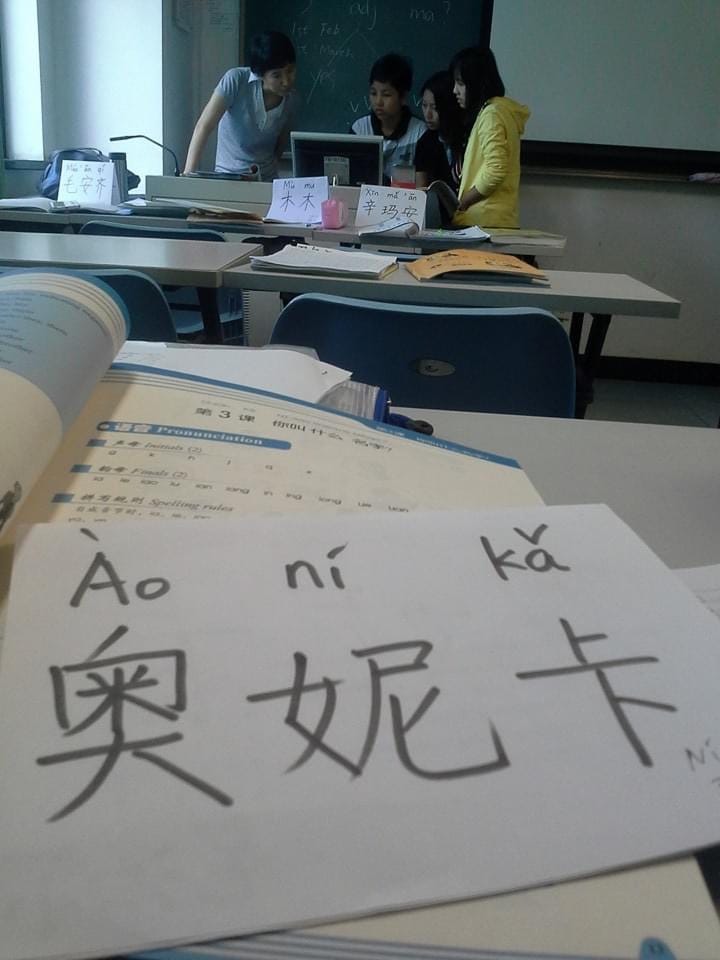
By medical student: Studying Chinese is a never-ending journey — one that’s as challenging as it is rewarding, and its difficulty depends heavily on your motivation, goals, and support system. I started learning in Shandong, continued through my undergraduate years in Beijing, and am now at Fudan University. For daily life and general communication, Chinese is absolutely manageable and opens up a richer experience of living in China. But in demanding fields like medicine, where you’re relearning complex academic content in a second language, the challenge intensifies. It can feel overwhelming at first — you might struggle to keep up, feel extra pressure, or get frustrated from having to relearn everything in Chinese. But pushing through that discomfort is part of the process, and every bit of effort counts toward your growth and future.
The key is to stay motivated and not do it alone. Whether your goal is academic, professional, or personal, having a like-minded community — friends or a study group willing to practice and make mistakes together — makes the journey much easier. I learned this lesson late, but forming a support network helps you stay consistent and pushes you out of your comfort zone in the best way. Learning Chinese isn’t just about mastering the language; it’s about what that mastery enables: deeper connections, better opportunities, and a more fulfilling life in China. Keep learning, keep relearning, and most importantly, keep going.
5. Would you recommend pursing a Chinese-taught degree?
Chinese language may not be everyone’s cup of tea but with that again one won’t know until you try. If you’re able and willing to patiently give time to study Chinese language, then I would recommend a Chinese-taught degree for better experience especially in terms of lectures. The experience of attending lectures, engaging with professors, and interacting with classmates in Chinese provides a depth of learning that goes far beyond what you can achieve in an English-taught program. It is also the only way to push your proficiency well beyond the level of HSK 6. While many programs require HSK 6 or HSKK Advanced as an entry condition, these tests are only the starting point. Once you are actually enrolled in a Chinese-taught program, you will quickly realize that much higher proficiency is needed to keep up with coursework and academic discussions.
My personal tip is to stay curious and make it a habit to learn new words in your field of study every day. Over time, that consistency will build the kind of fluency you need not just to survive, but to thrive in a Chinese academic environment.
6. How cheap/expensive is studying/living in China?
Tuition fees vary by program and university, so the best way to get exact figures is to check the official websites of the universities you are interested in. In my case, I was on the Chinese Government Scholarship, which covered everything: tuition, accommodation, a flight to China at the start of my studies and a return ticket after graduation, plus a monthly stipend (2,500 RMB for undergraduates, 3,000 RMB for master’s students, and 3,500 RMB for PhD students).
Living expenses depend a lot on the city. Beijing and Shanghai are naturally more expensive than smaller cities. Eating outside the campus usually costs between 30 and 50 RMB per meal, though cheaper options are available at local shops and street food stands. On campus, dining halls are heavily subsidized, so you can get a proper meal for 15 to 20 RMB.
Accommodation costs also vary by university and location. Dorms tend to be much cheaper than renting an apartment off-campus. Daily necessities and shopping are made affordable and convenient through platforms like Taobao, JD, and Meituan.
In short, with a scholarship or careful budgeting, living in China is manageable, though costs in big cities will always be higher than others.
7. What is something you wish you knew before coming to China?
As the first Nepali to graduate from Peking University’s undergraduate program (main campus, not the medical campus), I often wished I had a senior to guide me through this exact question. Looking back, I think an orientation session by the Chinese Embassy or even advice from Nepali alumni of Chinese universities would have been incredibly valuable.
Practical guidance on studying and living in China would have saved me a lot of trial and error. Things like tips for learning Chinese more effectively, understanding how to make the most of campus life, or simply knowing the basics of everyday life in China would have helped me feel more prepared. For example, I had no idea how digitalized payments were, which apps would be essential, or what cultural etiquette to be mindful of. Even a simple list of do’s and don’ts would have gone a long way.
8. Any tips on applying to Chinese universities?
Do your own research on Chinese universities. Check their ranking in the world, China and your subject-wise. Then check their official website and for any missing information on application and scholarship, email or call them for inquiries instead of running to consultancies.
Only apply to the top or well reputed universities of China. Regardless of if you’re pursing a Chinese-taught degree or an English-taught degree, always opt for the top universities in China with a good reputation as their facility and infrastructure will also be better. These universities have experience with international students and will have proper provisions. There are some Chinese universities that look to fill the international students quota offering scholarships but often don’t intend to provide decent university experience including opportunities. However, if you’re not looking for much and just want a scholarship in any Chinese university then this guide might not even be for you.
Start studying Mandarin: it’s never too late to start learning Mandarin. Even if you’re pursuing an English-taught degree, you will still be taking a 4 credit Chinese language course for two semesters. When you reach China, you’ll soon realize how essential it is to learn the language. While learning the language in China will be better, it’s not a bad idea to start learning in Nepal to give you some foundation or an idea of how the language works.
Read about China: regardless of your major, start from history and you can venture into your own field in China’s context. This will help you understand some part of how and why things work the way it does in China for a starter. If you get curious enough about Nepal-China relations then subscribe to The Araniko Project!
A full access to The Araniko Project provides a nuanced perspective on China’s overall influence in Nepal. Through the lens of history, art, society, politics, and economics, we explore how a global superpower influences Nepal, and how Nepal engages with China. As the only newsletter and institution in Nepal continuously dedicated to advancing the study of China, we are powered by the support of our readers and well-wishers. Therefore, consider going paid: Your subscription not only sustains our ability to produce original contents, but also helps us push forward national conversations on Nepal-China relations. You can click on subscribe button below or from our About us section for Nepali payments.
If any of our readers and subscribers wish to understand more on studying in China, you can contact us at: thearanikoproject@gmail.com for more.
Very comprehensive overview of studying in China, great work! I would encourage foreign students to avoid slipping into a foreign student bubble, join university clubs or societies, or look for events off campus, just try making some Chinese friends too.
Definitely agree with your point here, "There are some Chinese universities that look to fill the international students quota offering scholarships but often don’t intend to provide decent university experience including opportunities."
It's a good idea to think a bit about what you want to do when your course ends, if you wish to look for work in China or at a Chinese company be aware that some Chinese universities will include foreign students in their career planning or hold career days specifically for foreign students, but with other universities you are on your own. I encourage students to ask universities what kind of support their career's centre or international students college will provide when it comes time to look for a job.
Just want to say Congratulations! 🎈